A field guide for Commerce City facility managers
Industrial building cleanup in Commerce City
A fused sprinkler head over the dock, soot across the roof deck, hail through a shop skylight: this guide walks through how warehouses, plants and shops get cleaned, dried and rebuilt while the rest of the building keeps running.
This website is a draft preview. No phone line or request form is connected yet. Most large losses run from emergency cleanup into rebuilding. Ask any provider who handles each stage, and get it in writing before the first fan goes in.
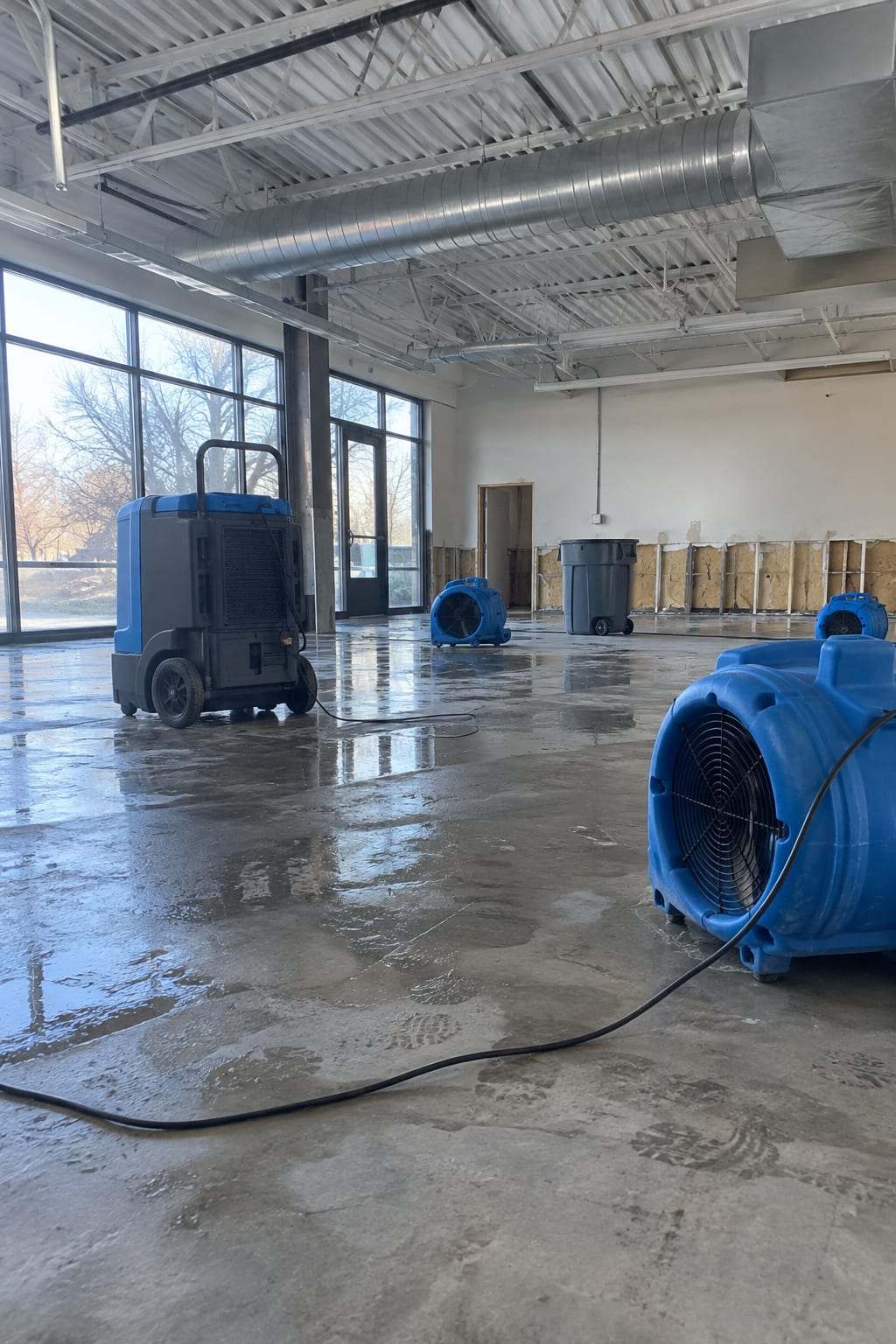
The space is cleaned and restored one area at a time, so the rest of the plant keeps running.
Five ways an industrial building takes on damage
-
A sprinkler head fuses or a branch line cracks, and the top tier of racking gets soaked first.
-
Wind or hail opens the roof over a bay, and rain falls straight onto the floor and the machines.
-
A fire stays in one corner, but its smoke coats the whole open building.
-
A pipe freezes and splits in an unheated dock or loading area.
-
Water reaches the office build-out, where drywall and ceiling tile soak it up within hours.
What this guide covers, and where it stops
It covers damage to the building itself from water, fire, smoke and storms: water pulled off slabs and out of dock pits, high bays dried out, debris hauled away, soot cleaned from joists, roof deck and equipment housings, and the repairs that follow.
Chemical spills and hazardous-material releases are a different job under different rules. They need licensed environmental contractors and, often, a report to regulators. If process chemicals are in the water or a spill is reportable, call those people first and the restoration crew second.
Covered in this guide
- Water pulled off slabs, out of dock pits and out of office build-outs
- Drying sized to high bays, with daily moisture readings
- Soot and smoke residue cleaned from joists, deck, walls and equipment housings
- Storm openings dried in, then cleaned up underneath
- Debris removal and the repairs that follow mitigation
Out of scope
- Chemical spills and hazardous-material releases
- Process equipment repair or recertification
- Soil or groundwater remediation
These need licensed environmental or equipment specialists. Call them first if they apply.
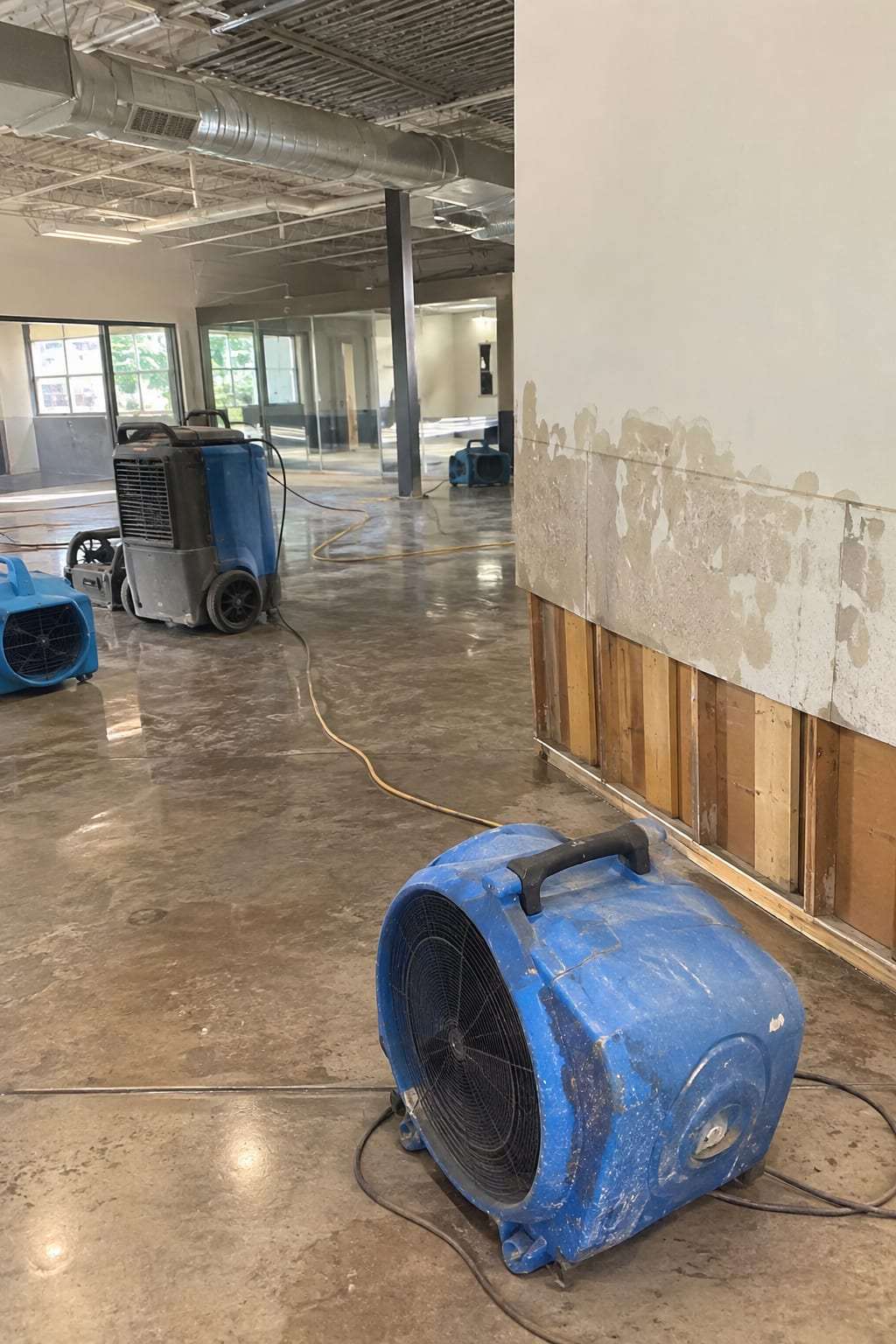
Smoke rises first, so the roof deck and joists usually carry the heaviest residue.
A warehouse slab shrugs off water. The office built inside it, the cartons on the top rack and the wiring near the floor do not.
Water damage in office build-outs inside industrial buildings
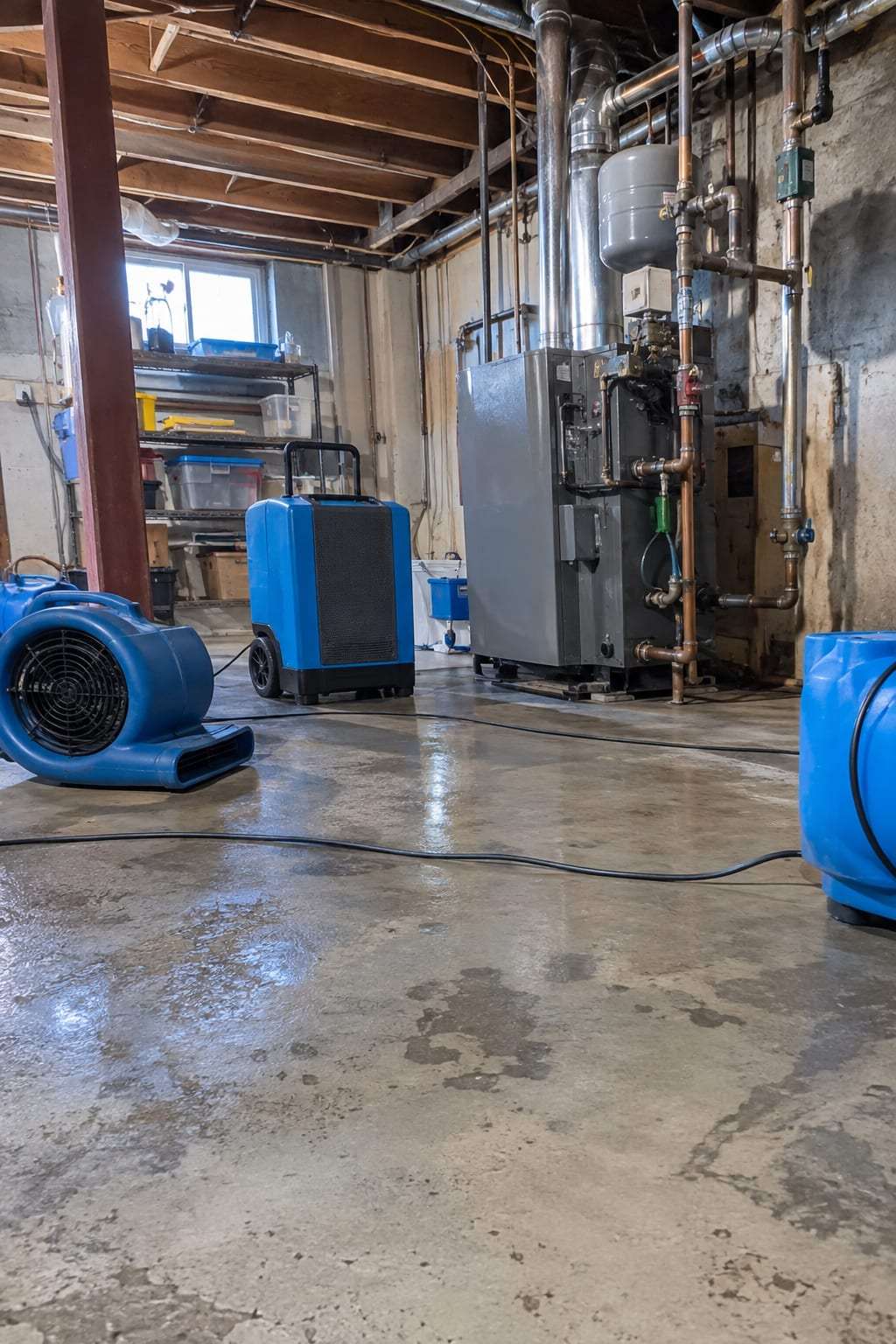
A clear work zone lets the rest of the structure stay in use.
An industrial job has site rules a house never does
The fastest restoration is not always the cheapest one. Planning the work around how the facility runs keeps more of it running.
Before the crew walks in
- Sign-in
- The crew roster, sign-in point and any badge or escort rules get settled before the first truck arrives.
- Hazard walk
- The crew lead walks your hazards with you: forklift lanes, overhead racking, energized equipment, chemical storage.
- Lockout
- Your staff control lockout, tagout and shutoffs. The crew works only in areas you have released.
- Protective gear
- Crews wear equipment suited to the task, and your site rules are confirmed in advance.
While the work goes on
- Zones
- Split the floor so shipping, receiving or production carries on outside the work area.
- Inventory
- Agree what moves, who moves it and where it stages. Damaged goods get photographed before they leave, for the claim.
- Docks
- Schedule equipment deliveries and debris haul-off around dock appointments.
- Hours
- Run night or weekend shifts where the facility can support them.
How a large-space cleanup runs
A high bay needs equipment and sequencing sized to the building, and to the work still happening inside it.
-
Walk the site
Map the wet or sooty area, the building systems involved and any hazard that needs a different specialist.
-
Plan around operations
Decide which zones stay open, where equipment stages and when the loud work happens.
-
Extract, clean, dry
Pull water and debris, clean soot off the structure, and run drying equipment sized for the volume of air.
-
Document
Photos, daily moisture readings and an itemized estimate, built so your insurer can follow every line.
-
Repair
Rebuild walls, ceilings, office areas and finishes once the space reads clean and dry.
Commerce City's industrial corridor
Commerce City sits in Adams County, directly northeast of Denver, and has long been one of the metro area's working industrial centers: rail yards, distribution buildings, manufacturing and energy infrastructure strung along I-270, I-76 and the South Platte River. Newer neighborhoods have grown to the north and east, out toward the Rocky Mountain Arsenal National Wildlife Refuge.
Most of the industrial stock is big and open, with high ceilings, concrete slabs and offices built inside the shell. Any cleanup plan has to work at that scale and around whatever the building is still doing.
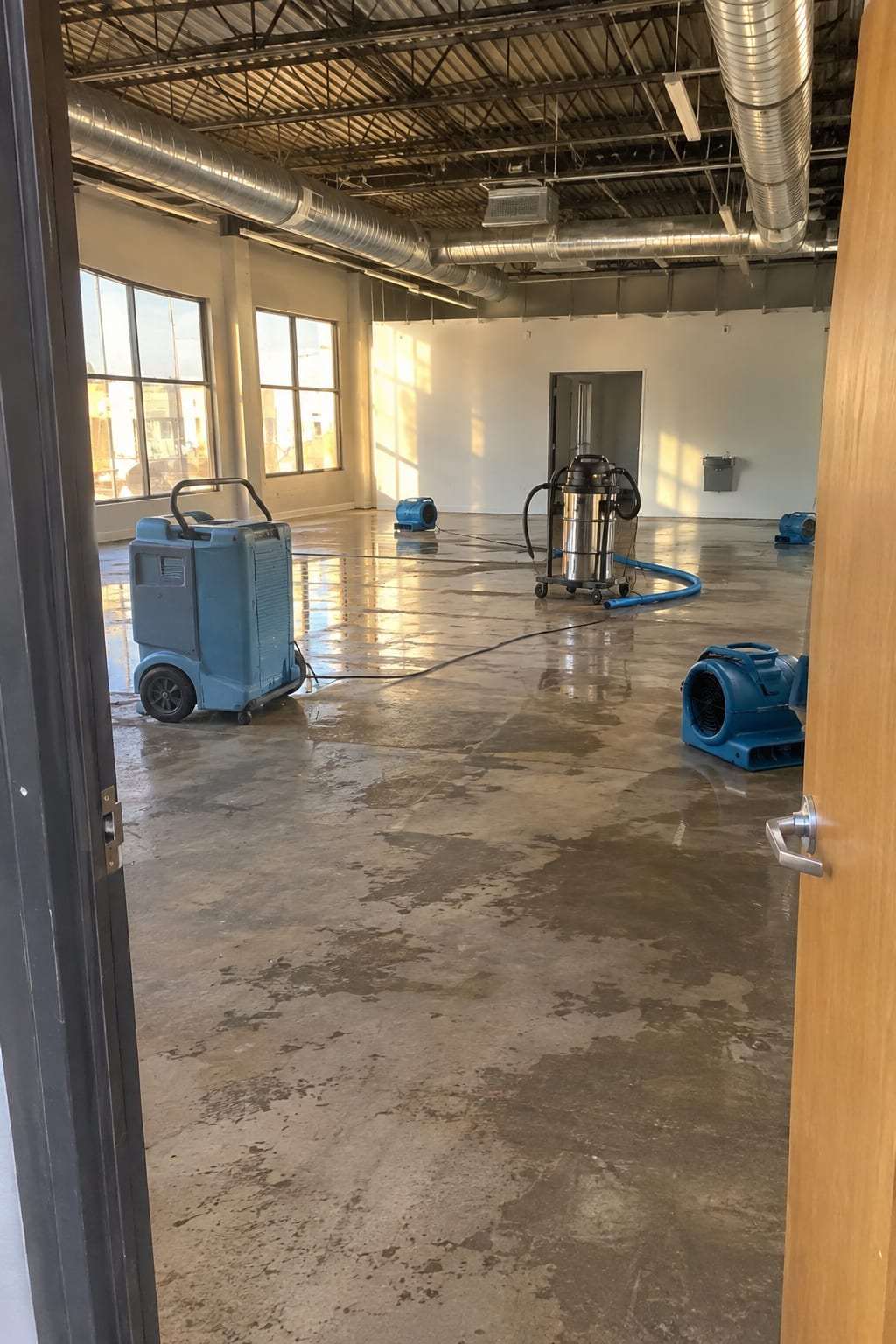
Commercial build-outs inside an industrial shell finish last, after the space is dry.
- Commerce City is in Adams County. Confirm that a provider you call covers this part of the county.
- Spills and hazardous-material releases need separately licensed environmental contractors.
- A pre-loss plan shortens the first day. Ask a restoration company whether it offers one, or a priority response agreement.
- Many providers serving Commerce City are based elsewhere in the metro. Ask about travel time before you commit.
ZIP codes served: 80640 (Henderson), 80022 (Commerce City).
Also nearby: 80216, 80266, 80207, 80229, 80238, 80205, 80221, 80202, 80220, 80211, 80260, 80206, 80239, 80218, 80030, 80203, 80010, 80233.
Guides and checklists
Written for the person who has to keep the building running while it gets fixed.
- Guides
Each guide takes one problem that plant, warehouse and shop managers along the Commerce City corridor run into after water, fire, smoke or storm damage.
- Checklists
Print these, adapt them and keep them where the night supervisor can find them: a pre-loss planning worksheet, a first-hours checklist, a contractor orientation list, a claim documentation log, the questions to put to any restoration firm, and a seasonal calendar built around Front Range freezes, hail and wind..
- Districts
Older brick and block buildings sit near the rail yards and the South Platte.
Frequently Asked Questions
What a good first call sounds like
A provider worth hiring asks what kind of building it is, how big, what happened and whether anything hazardous is involved. Ask a few things back: who walks the site, when, and what you get in writing before mitigation starts.
Is a chemical spill cleaned up the same way?
No. Hazardous-material spills and environmental remediation need specially licensed environmental contractors, and some must be reported to regulators. This guide covers property damage from water, fire, smoke and storms.
Can a whole warehouse be dried out?
Yes. Large spaces dry with high-capacity dehumidifiers and air movers, often on temporary power, with readings taken every day. Drying the wet zone instead of the entire building is the usual approach.
Can we keep operating during cleanup?
Often, in part. Crews work zone by zone with containment between work areas, so the unaffected parts of the floor keep shipping, receiving or producing.
What paperwork should the insurer get?
Photos, moisture readings, equipment logs and an itemized estimate. Ask your adjuster which estimate format the carrier wants before the provider writes one.
Can soot be cleaned off equipment?
Often, from equipment exteriors and building surfaces. Sensitive electronics and machinery need an evaluation from the manufacturer or a qualified technician first.
Does cleanup include rebuilding?
Sometimes. Some restoration companies handle reconstruction after mitigation; others hand it to a general contractor. Find out which before work starts.
Request a site walk
This form is not connected. This website is a draft preview: no business has been confirmed to receive requests, so the fields below are switched off and nothing can be sent. In an emergency, call 911.